Wednesday, 12 September 2012

Ch – ch – ch - changes

Welcome!

Welcome to everyone who is starting out in Advanced Level English this September. And for those who are returning for A2s, please be generous and share with the AS kids how www.crossref-it.info can help them cope with a new level of study!

English in the news

If the furore in the news and teaching profession is anything to go by, those just embarking on AS English may be the survivors of a tougher GCSE marking system than that faced in the last few years. And there are more changes to come.

Exam style

In recent years, many AS and A2 English syllabuses have had modular and/or coursework elements, echoing the format of many GCSE courses. However, from this September, GCSEs are being re-shaped to return to linear courses with exams at the end of Year 11 only.

Modular A Levels still exist – for now – but moves are being made to focus examination towards the end of each year. Some are even floating the idea of returning to one set of exams at the end of the two years, so that Year 12 students don’t lose curriculum time on study leave.

What works best?

There has to be a balance between offering courses that enable students to perform to the best of their ability, whilst also maintaining a standard that employers and educational institutions respect, and that compares with the exams students at a similar level are sitting in other countries.
  • Modular or linear?
    Typically it takes a while for post GCSE students to ‘get’ the level of thinking and writing that is demanded by A Level – and that cognitive leap is only made part way through Year 12. Do you want marks taken from quite early on in your studies to count for your final grade?

    Alternatively, whilst you are likely to be at your peak performance for exams at the end of a two year programme of study, do you want everything to hang on a few days in early June when something as simple as a bad summer cold can mean your efforts mis-fire?
  • The international market
    Some of you will just have taken IGCSEs and may be going on to do an I(nternational) B(accalaureate) instead of AS and A2 Levels. Do you think they were, or are, tougher than the national syllabuses most of your mates are familiar with?

    Because we have to be as good as all the non-UK students who will be part of the workforce, and also want a good chance of working abroad ourselves, the grades we get need to be equivalent to those of other 18 year olds, not seen as some ‘soft-option’.

    But that means that the majority may not achieve the higher grades we’ve got used to – which is where the distress about changes to the GCSE English grade boundaries hits…

 What’s your opinion?


It’s your education, and the changes the Education Dept. brings in may make all the difference to how you achieve in the future. We’d love to know what you think. Post on the Crossref-it.info Facebook page.

And meanwhile, enjoy your course!

Wednesday, 18 July 2012

Catch it while you can!

If you haven’t yet seen BBC’s The Hollow Crown series of Shakespeare’s history plays, then go for it. As the summer holidays start or exam leave (dare we say it) begins to drag, indulge yourself in your own ‘Shakefest’ over a series of days. You might just be riveted!

Why bother?

 Shakespeare is renowned as the world’s greatest dramatist. He features on every English exam syllabus in the UK– and quite honestly, students don’t always know why. Aren’t lots of plays, lots of dramatists pretty good really?

Individually, many are. Where Shakespeare scores is that through his huge range of work he covers just about every human emotion, then explores them from a multitude of perspectives. Alongside comic cameos, he creates characters who are believably rounded, then plays with our response to them. By attracting us towards them then repelling us from them, we are left having to make our own judgements.

Make your mind up

Richard II – a gorgeous wastrel or martyred innocent? Is Henry IV a righteous leader or ambitious aggressor? Particularly intriguing is Falstaff, the joker, cheat, faithless yet loving uncle figure. Whilst we despise his cowardice and greed, we also understand his fear of aging and loneliness which comes to the fore in Henry IV Part Two.

And if these characters sound rather distant from teenage experience, try out Prince Hal, later to become Henry V, as he battles with his dad, shirks his responsibilities, disappoints peoples hopes, then rises to the huge challenges put before him. That’s a trajectory many of us might understand.

If you can, catch up the plays in order on BBC iPlayer before seeing Hal’s final triumph in Henry V this Saturday evening on BBC Two.

I hope you’ll not only enjoy them but have a more profound understanding of life. Because ultimately, that’s why Shakespeare is great.

Wednesday, 4 July 2012

Students demo. inter-textuality

This time last year we had some hot days (remember them?) but that didn’t stop some AS Eng. Lit. students working hard under even hotter studio lights. Students from five UK schools from Hertfordshire to Nottinghamshire had just a day each to film extracts from some of the texts being studied for A Level English Literature.

A wide range of works were covered, for example:

> plays such as Measure for Measure and The White Devil
> novels such as those by Dickens and Scott Fitzgerald
> verse by poets such as Donne and Rossetti.

A whole new understanding

 The aim of the enterprise was to illustrate how much authors use allusions within their work. They assume that their audiences will pick up the references, thereby adding a whole new layer of understanding.

Unfortunately, with changing times, not everyone stays familiar with the references that were once known so well.
For example, most people watching Hamlet today won’t register that, when Hamlet confronts his Mum about how gross he regards her hasty marriage to his step dad, he adds weight to his disgust by quoting the Bible at her. No pressure then!
 To illustrate how authors have drawn on references like these from the Bible, performances were interspersed by relevant verses, or particular narratives were used to frame the extracts.

Impressing the examiners


Given that any half decent A Level essay or exam answer will be expected to mention concepts such as inter-textuality and the context of reception, these film clips (which last from between 2 – 7 minutes) provide an easy way to delight your teachers / examiners.

To help reinforce the concept, a series of lesson downloads accompany each performance. (Don’t tell anyone, but sometimes even your teachers don’t know this stuff, so we’ve given them a helping hand.)

Why not explore Inter-textuality AV resources and see if one of the authors you are studying is featured? It could just open your eyes to a new way of reading…

Wednesday, 20 June 2012

New English Language resources!

There is a lot on the internet that will help you get to grips with Eng. Lit. but finding quality resources on English Language has always been trickier.

The English language is the richest and most diverse in the world. Studying how it works and is put together is a discipline in its own right, and Language courses across all the main A Level exam boards have become increasingly popular.

Yet any linguistic analysis involves can involve a bewildering array of semantic fields and technical lexis, as students attempt to apply fresh skills to meet exam requirements.

Help at hand

New Language resources being launched today are designed to do three things:

> to help you get a handle on what technical terms mean in practice
> > to demonstrate methods of analysing texts
> > > to provide guidance on how to shape your answer so that you really engage with relevant Assessment Objectives.

We show you the kind of responses examiners are looking for and and even provide some downloadable activities to test yourself on.

Written by experienced Language teachers and current examiners, you’ll find what you need at Aspects of Literature > Studying Early Modern Language

Language change

The UK has a centuries old written heritage, so it’s not difficult to find evidence of the changes English has undergone. One of the most effective ways of doing this is by looking at how one text is presented in different eras.

Given the Christianised Western cultural heritage of Britain, it’s not surprising that the Bible has been copied and printed in English over hundreds of years. Its central message has been handed down in a variety of translations designed to meet the needs of their day.

Translated in the era of Shakespeare’s later work, The King James Bible is a memorable example of Early Modern English. Its impact has lasted for centuries, until the pressure for modern versions became overwhelming in the late twentieth century. You can see language change in action when you compare the KJB to the accessible Good News Bible of the 1970s for example, or the gender neutral Today’s New International Version of the noughties.

So it makes sense to analyse this text in order to understand the processes which have shaped linguistic change and that is exactly what the new resources do. And because the Bible is unfamiliar to many, they are accompanied by helpful articles which explain the jargon and provide useful ways into the text.

Ready-made resources for teachers

The good news for English Language teachers is that all the new material is available as downloadable pdfs so that it can easily be used in the class or at home, whether there is internet access or not.

Check out the Crossref-it.info English Language Resources and discover we’ve done the hard work for you!

Tuesday, 15 May 2012

Shakespeare back from the dead!

Dead?

Reading Shakespearean drama in a stuffy classroom, under pressure to ‘get through’ various acts and scenes, it’s no wonder that students can get bored with the Bard.

In a world of Twitter and celebs it isn’t always easy to understand the immediacy of his verse – Shakespeare’s era seems a world away.

Or alive?

In fact there were huge similarities:
  • Just as we hear in the news today, there were issues about taxation and currency devaluation (Eurozone, anyone?)
  • Just as in premiership football now, new money was pushing aside traditional hierarchies
  • Today’s urban street violence and casual murder concerned Jacobean Londoners too
  • ‘You are what you wear’ was as true then as it is now.
The Elizabethan / Jacobean eras witnessed huge changes – so much was in flux that it is entirely appropriate to describe it as Shakespeare’s Restless World.

Shakespeare’s Restless World

This is the title of a fantastic new resource created by the BBC. Taking 20 historical objects
common in Shakespeare’s world, a short audio narrative take listeners right to the heart of his
plays and the daily experience of his audiences.

Neil MacGregor shows how rapiers were used in Romeo and Juliet, why so many plays
contained severed heads and a wealth of other material. There are images and sometimes
videos to accompany every narrative.

Go to http://www.bbc.co.uk/radio4/features/shakespeares-restless-world/index.shtml and encounter a Shakespearean word that is very much alive and kicking.

Thursday, 19 April 2012

Lost in Austen?

Some lucky students are still enjoying the Easter holidays, not due to go back until next Monday. This gives a little extra time for chilling / revision / coursework catch-up - according to kind of student you are ;-).
Meanwhile many teachers are madly planning lessons and resources for the coming term (such is a teacher’s ‘holiday’).

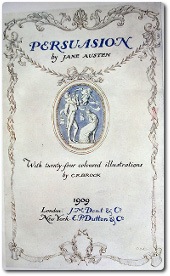
Last month a new student guide was released on the web to help pupils get to grips with Jane Austen’s Persuasion, which features on the OCR and Cambridge Pre U Eng. Lit. syllabuses. Now there is imminent help for stressed teachers – a series of downloadable teaching ideas and resources to help your students find their way into a better appreciation of the novel, which will be shortly available.
  • Find out whether Austen felt her heroine Anne Elliot just a little too good to be palatable.
  • Discover what Austen and Thomas Hardy have in common (apart from being English novelists that is!).
Where?

Both guide and downloads are to be found on Crossref-it.info. This web resource is regularly getting almost thousands of visits a day, as more and more students discover how it can help them succeed at AS, A2 and even undergraduate study.

If you are a regular subscriber to this blog you already know this. You know you have got all the support you need as you face the examination season.
Why not make yourself feel even better – perform an act of kindness and pass the link on to someone who doesn’t.

Wednesday, 4 April 2012

A Metaphysical perspective on Easter

Easter Wings by George Herbert
Easter is a funny old celebration. For some it is just about the up-surging of Spring (cue bunnies, lambs and chicks) and of an appetite for chocolate (cue eggs)!

Rejoicing in the new life seen in nature reflects the idea that Christians believe new life is on offer through the person of Jesus, who was witnessed alive 38 hours after having been tortured and killed by the Romans, 2000 years ago.

And there’s the oddness – that a celebration of life is only achieved by confronting pain and death. There is an about-turn in the emotions experienced in the seven days leading to Easter Sunday: of victorious cheering, then fearful rejection; of despair and grief, then joy and certainty.

George Herbert captures these jumps in perspective in his 1633 poem, Easter Wings. In both the shape and the mood of his verse he reflects the downward - then upward - move of the heart experienced by those who hold the Easter story dear.

Easter Wings by George Herbert

        Lord, who createdst man in wealth and store,
            Though foolishly he lost the same,
                Decaying more and more,
                    Till  he  became
                        Most poore:
                        With  thee
                    Oh  let  me  rise
                As larks, harmoniously,
            And sing this day thy victories:
        Then shall the fall further the flight in me.

        My  tender  age  in  sorrow  did  beginne:
            And still with sicknesses and shame
                Thou didst so punish sinne,
                    That  I  became
                        Most thinne.
                        With   thee
                    Let  me  combine
                And feel this day thy victorie:
            For,  if  I  imp  my  wing  on  thine
        Affliction  shall  advance  the  flight  in  me.

It is as if Herbert is saying that celebration is more meaningful when it has come through pain, rather than being cheaply won.To get a better insight into Herbert’s poem, check out Easter Wings by George Herbert on Crossref-it.info

Meanwhile, enjoy the break – and those eggs!

Headlines