Wednesday, 20 June 2012

New English Language resources!

There is a lot on the internet that will help you get to grips with Eng. Lit. but finding quality resources on English Language has always been trickier.

The English language is the richest and most diverse in the world. Studying how it works and is put together is a discipline in its own right, and Language courses across all the main A Level exam boards have become increasingly popular.

Yet any linguistic analysis involves can involve a bewildering array of semantic fields and technical lexis, as students attempt to apply fresh skills to meet exam requirements.

Help at hand

New Language resources being launched today are designed to do three things:

> to help you get a handle on what technical terms mean in practice
> > to demonstrate methods of analysing texts
> > > to provide guidance on how to shape your answer so that you really engage with relevant Assessment Objectives.

We show you the kind of responses examiners are looking for and and even provide some downloadable activities to test yourself on.

Written by experienced Language teachers and current examiners, you’ll find what you need at Aspects of Literature > Studying Early Modern Language

Language change

The UK has a centuries old written heritage, so it’s not difficult to find evidence of the changes English has undergone. One of the most effective ways of doing this is by looking at how one text is presented in different eras.

Given the Christianised Western cultural heritage of Britain, it’s not surprising that the Bible has been copied and printed in English over hundreds of years. Its central message has been handed down in a variety of translations designed to meet the needs of their day.

Translated in the era of Shakespeare’s later work, The King James Bible is a memorable example of Early Modern English. Its impact has lasted for centuries, until the pressure for modern versions became overwhelming in the late twentieth century. You can see language change in action when you compare the KJB to the accessible Good News Bible of the 1970s for example, or the gender neutral Today’s New International Version of the noughties.

So it makes sense to analyse this text in order to understand the processes which have shaped linguistic change and that is exactly what the new resources do. And because the Bible is unfamiliar to many, they are accompanied by helpful articles which explain the jargon and provide useful ways into the text.

Ready-made resources for teachers

The good news for English Language teachers is that all the new material is available as downloadable pdfs so that it can easily be used in the class or at home, whether there is internet access or not.

Check out the Crossref-it.info English Language Resources and discover we’ve done the hard work for you!

Tuesday, 15 May 2012

Shakespeare back from the dead!

Dead?

Reading Shakespearean drama in a stuffy classroom, under pressure to ‘get through’ various acts and scenes, it’s no wonder that students can get bored with the Bard.

In a world of Twitter and celebs it isn’t always easy to understand the immediacy of his verse – Shakespeare’s era seems a world away.

Or alive?

In fact there were huge similarities:
  • Just as we hear in the news today, there were issues about taxation and currency devaluation (Eurozone, anyone?)
  • Just as in premiership football now, new money was pushing aside traditional hierarchies
  • Today’s urban street violence and casual murder concerned Jacobean Londoners too
  • ‘You are what you wear’ was as true then as it is now.
The Elizabethan / Jacobean eras witnessed huge changes – so much was in flux that it is entirely appropriate to describe it as Shakespeare’s Restless World.

Shakespeare’s Restless World

This is the title of a fantastic new resource created by the BBC. Taking 20 historical objects
common in Shakespeare’s world, a short audio narrative take listeners right to the heart of his
plays and the daily experience of his audiences.

Neil MacGregor shows how rapiers were used in Romeo and Juliet, why so many plays
contained severed heads and a wealth of other material. There are images and sometimes
videos to accompany every narrative.

Go to http://www.bbc.co.uk/radio4/features/shakespeares-restless-world/index.shtml and encounter a Shakespearean word that is very much alive and kicking.

Thursday, 19 April 2012

Lost in Austen?

Some lucky students are still enjoying the Easter holidays, not due to go back until next Monday. This gives a little extra time for chilling / revision / coursework catch-up - according to kind of student you are ;-).
Meanwhile many teachers are madly planning lessons and resources for the coming term (such is a teacher’s ‘holiday’).

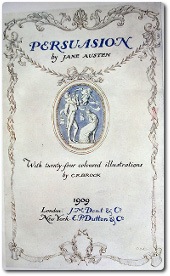
Last month a new student guide was released on the web to help pupils get to grips with Jane Austen’s Persuasion, which features on the OCR and Cambridge Pre U Eng. Lit. syllabuses. Now there is imminent help for stressed teachers – a series of downloadable teaching ideas and resources to help your students find their way into a better appreciation of the novel, which will be shortly available.
  • Find out whether Austen felt her heroine Anne Elliot just a little too good to be palatable.
  • Discover what Austen and Thomas Hardy have in common (apart from being English novelists that is!).
Where?

Both guide and downloads are to be found on Crossref-it.info. This web resource is regularly getting almost thousands of visits a day, as more and more students discover how it can help them succeed at AS, A2 and even undergraduate study.

If you are a regular subscriber to this blog you already know this. You know you have got all the support you need as you face the examination season.
Why not make yourself feel even better – perform an act of kindness and pass the link on to someone who doesn’t.

Wednesday, 4 April 2012

A Metaphysical perspective on Easter

Easter Wings by George Herbert
Easter is a funny old celebration. For some it is just about the up-surging of Spring (cue bunnies, lambs and chicks) and of an appetite for chocolate (cue eggs)!

Rejoicing in the new life seen in nature reflects the idea that Christians believe new life is on offer through the person of Jesus, who was witnessed alive 38 hours after having been tortured and killed by the Romans, 2000 years ago.

And there’s the oddness – that a celebration of life is only achieved by confronting pain and death. There is an about-turn in the emotions experienced in the seven days leading to Easter Sunday: of victorious cheering, then fearful rejection; of despair and grief, then joy and certainty.

George Herbert captures these jumps in perspective in his 1633 poem, Easter Wings. In both the shape and the mood of his verse he reflects the downward - then upward - move of the heart experienced by those who hold the Easter story dear.

Easter Wings by George Herbert

        Lord, who createdst man in wealth and store,
            Though foolishly he lost the same,
                Decaying more and more,
                    Till  he  became
                        Most poore:
                        With  thee
                    Oh  let  me  rise
                As larks, harmoniously,
            And sing this day thy victories:
        Then shall the fall further the flight in me.

        My  tender  age  in  sorrow  did  beginne:
            And still with sicknesses and shame
                Thou didst so punish sinne,
                    That  I  became
                        Most thinne.
                        With   thee
                    Let  me  combine
                And feel this day thy victorie:
            For,  if  I  imp  my  wing  on  thine
        Affliction  shall  advance  the  flight  in  me.

It is as if Herbert is saying that celebration is more meaningful when it has come through pain, rather than being cheaply won.To get a better insight into Herbert’s poem, check out Easter Wings by George Herbert on Crossref-it.info

Meanwhile, enjoy the break – and those eggs!

Wednesday, 28 March 2012

Are you open to persuasion?

No, this is not a quiz to discover the flexibility of your personality!

We just want you to enjoy exploring how to get the most of Austen’s final (completed) novel, Persuasion.

Crossref-it.info has recently launched an online study guide where you can get to grips with (among other things) how the theme of the novel’s title runs through the text. The heroine, Anne Eliot, has to learn how to deal with the efforts of others to run her life, and work out who/what to listen to when making decisions. These are issues many of us may be confronting right now…

Spring has sprung


And that means that as you look around you, you realise that all sorts of other things have appeared without you noticing. The natural world has woken up, with leaves unfurling, fresh shoots sprouting from the earth and suddenly flowers following the longer, warmer beams of the sun. As Larkin put it so evocatively in The Trees:
The trees are coming into leaf
Like something almost being said;
The recent buds relax and spread,
…………
Last year is dead, they seem to say,
Begin afresh, afresh, afresh.

(To read more, check out the recently released Philip Larkin: The Complete Poems (Faber),
which contains all the published and unpublished verse, plus comprehensive notes.)

Literary developments

In the literary world, as well as the new crossref-it Persuasion guide, a few more events have
come to fruition:
  • The bi-centenary of Charles Dickens’ birth has been celebrated (on 7th February)
  • John Burnside has won the 2011 T S Eliot Prize for Poetry with Black Cat Bone (probably coming to an Eng. Lit syllabus near you in the next few years)
  • Various literary works have made it on to the big screen, such as:
    • The Woman in Black (Susan Hill)
    • War Horse (Michael Morpurgo)
    • Coriolanus (Shakespeare)
  • If you are studying anything by Angela Carter this year, try and grab a library copy of the new study of her and her work which appeared in Feb, A Card from Angela Carter by Susannah Clapp (Bloomsbury)
  • Meanwhile, if Webster is on your syllabus, look out for the new production of The Duchess of Malfi at Kevin Spacey's Old Vic in London, which starts on 28th March (tomorrow).
The natural world and the world of literature are alive and active. Look around you and enjoy!

Wednesday, 11 January 2012

Happy New Year!


What will 2012 bring?

Our user figures show that term has definitely re-started, perhaps with a groan if not with a bang, after all the indulgence of Christmas.

The big events in the UK this coming year are rare:
  • For only the second time in our history we have a monarch who has clocked up sixty years on the throne – the previous time it was Queen Victoria in 1897. Queen Elizabeth II’s Diamond Jubilee will be celebrated in June
  • The Olympic Games come to London – last seen 64 years ago in austerity Britain in 1948, and before that in 1908.
Literary highlights

In the literary world, having just completed had the 400th anniversary of the King James Bible in 2011, 2012 sees the 200th anniversary of the birth of Charles Dickens. As with the Bible, the characters and tales which flowed from Dicken’s fevered imagination have proved indelible within British cultural consciousness. Even recently they have inspired related novels such as Mr Pip by Lloyd Jones and Jack Maggs by Peter Carey.

A visual imagination

Dickens’ typically vivid detail in scene setting and characterisation has always inspired film and progamme makers – more screen versions of his stories have been made than of any other novelist. The anniversary means that there is a plethora of adaptations coming to screens big and small, as well as lots of discussion programmes.

Over Christmas, there was the dark-toned version of Great Expectations, run over three successive hour-long episodes. It omitted much of the humour and domestic intimacy associated with Joe and Biddy, the Pockets and Wemmick’s castle in Walworth. Instead it focused on the desperate machinations of Miss Havisham and Orlick. It will be interesting to compare it with the film of Great Expectations being released later in the year.

Speaking of films

Crossref-it.info is still on the look out for A Level teachers (active or retired) to submit their resource ideas to accompany short film clips of particular exam text extracts which draw on biblical allusions (all supplied). If you need help there is a sample worksheet based on one of the extracts. However, we are also looking for any interesting ways of handling this material appropriate for English A Level teaching.

Key facts
  • The deadline for new submissions has been extended to Monday 30th January
  • The successful resource selected for each extract will earn its creator £50
  • We are looking for resources on the following texts:
    • Elizabethan / Jacobean: Donne - Death be not proud, Hymn to God in my sicknesseMeasure for Measure
    • Romantic Lit.: Wordsworth - Intimations of Immortality
    • Victorian Lit.: Jane Eyre / Great Expectations / Our Mutual Friend / Tess of the d’Urbervilles
    • Modern Lit.: The Handmaid’s Tale / Clough – The Latest Decalogue (not a set text – but a fun introductory tool if you are looking at intertextuality).
There is a wealth of experience amongst those who have taught these texts – why not put it to good use and get paid for your ideas! Do get in touch soon at admin@crossref-it.info!

Wednesday, 21 December 2011

The background to pop music

Paul Gambaccini
As the 400th anniversary year of the publication of the King James Bible draws to its close, UK DJ Paul Gambaccini has examined the influence of this text in some unexpected places – on the songs of Elvis, George Michael and The Rolling Stones to name but a few.

Where do the stories come from?

Contemporary music draws more consistently on the Old and New Testaments than on any other text. Crossref-it.info already carries a list of literary works whose titles allude to the Bible, but in a recent BBC Radio 4 programme, Gambo reeled off a list of popular songs whose writers were influenced by characters, stories and actual verses from scripture.

Ranging across the genres of rock, blues, country & western, pop and soul, artists keep using biblical references because they anticipate that we, the audience, will have a rich cache of associations to draw on:
  • For example, by simply calling the protagonist of his song about betrayed love Delilah, Tom Jones expects us to bring to mind the whole sorry tale of how love for a fickle woman destroyed a hero
    • At Crossref-it.info we know that many may not have that story in their ‘culturalkit-bag’, which is why you can read about it here or in the source version.
  • Springsteen’s powerful lyric, Adam raised a Cain, resonates with the whole idea of disappointed idealism, of the inescapability of parental influence and of love bound up with pain – all issues that are seeded by the loss of Eden and Fall of humankind depicted in Genesis 3 and 4.
  • The plaintive anthem of the first Shrek film, Leonard Cohen’s Hallelujah, is actually inspired by the troubled love life of the Old Testament King David.
If you can spare 30 mins, why not listen to the programme, originally broadcast on Saturday 17th December, 2011.

We need your help!

If you didn’t get to see Dec 7th’s blog, please check it out and pass the message on!

Headlines