Wednesday, 23 March 2016

Teaching Othello at A Level – new worksheets launched

Earlier this term, a new crossref-it.info text-guide was launched on Shakespeare’s tense and dramatic tragedy, Othello, alongside the entire text online – all free and easily accessible at www.crossref-it.info

This play features widely across the 2015+ A Level English syllabuses so it’s likely that many teachers are soon to embark on teaching it, if they haven’t already.

Cut your lesson prep!

To save teachers the headache of preparation over the long awaited Easter holidays, a series of six detailed worksheets for teachers are being launched today. They cover topics such as:
  • The central relationship between Othello and Iago
  • The role of the three women in the play
  • An exploration of the structure, pace and tension of Othello
  • The way attitudes towards love, sex and male/female relationships motivate characters
  • An examination of the momentous final scene
  • How far prejudice about ‘outsiders’ is at the heart of the play.

Every worksheet contains ideas and activities which will take you through a number of lessons and homework sessions, as well as being extremely helpful when it comes to revision! Most of the lesson sequences also have easily photocopy-able resources to hand to students, saving you that extra bit of effort.

All bases covered

Written by established UK A Level Literature teachers and examiners, who know what you need to deliver to ensure exam success, the worksheets have:
  • Clear teaching objectives
  • Introductory activities
  • Textual exploration
  • Ideas to structure discussion
  • Creative or re-creative tasks to engage students laterally
  • Traditional essay topics 
  • Extension tasks for the quick or dedicated workers amongst your students.

Where it is helpful, the lesson ideas refer students back to the extensive contextual background knowledge which they need to be aware of, found in the main Othello text-guide.

We hope students of Literature everywhere will come to appreciate the qualities of this exciting drama, as we celebrate the 400th anniversary of the man who wrote it.

Tuesday, 8 March 2016

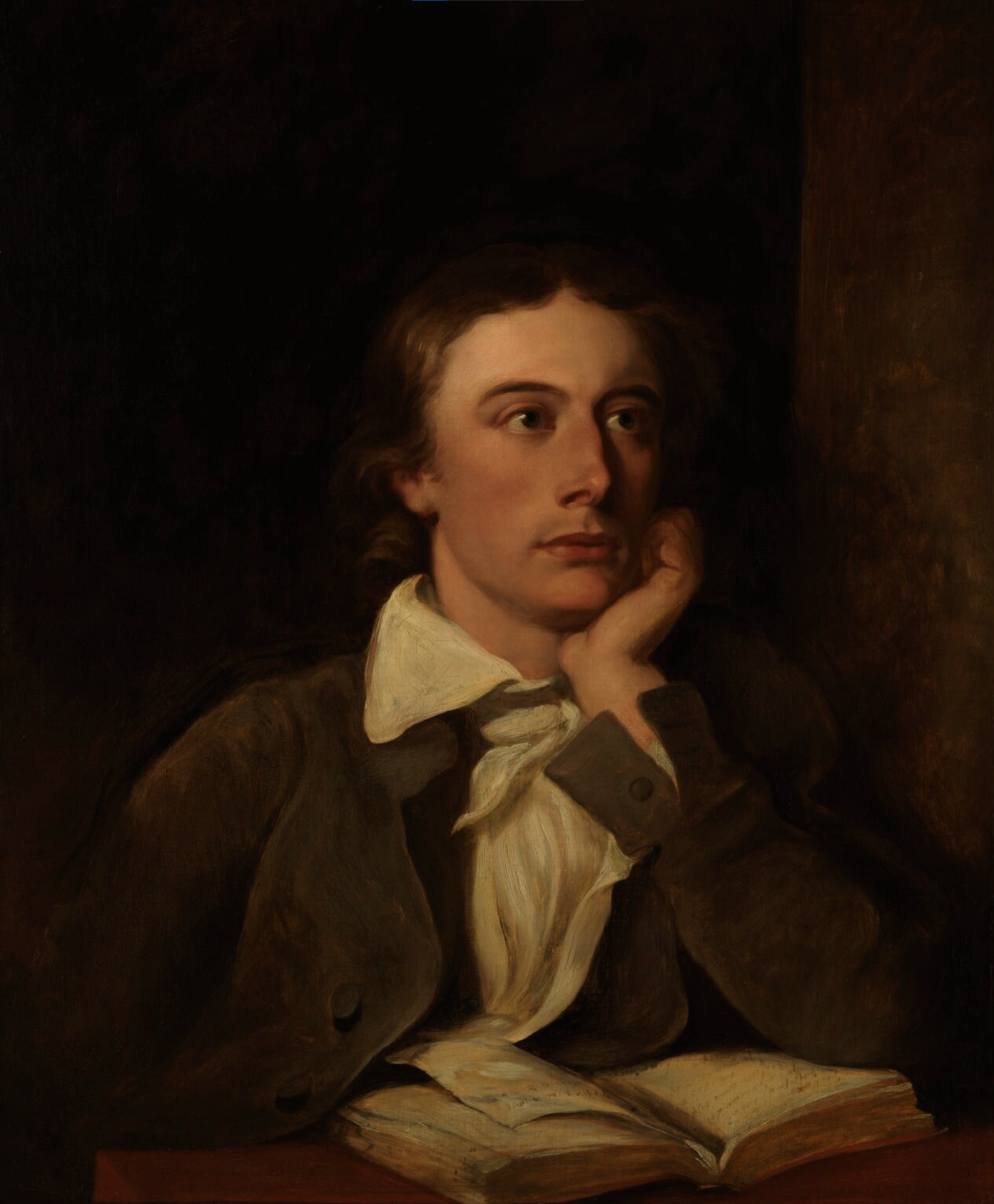
Teaching Keats at A Level – new worksheets launched


A poem by any other name.. 


Why do poets chose particular poetic forms for certain subject matter? And really, is there much difference between a sonnet and an ode?

If you are teaching selected poetry by John Keats this year, you may be pleased to know that new John Keats worksheets for teachers launched today will help you address these and other issues.

The worksheets comprise a series of ideas which will carry you through a number of lessons and help your students get to grips with the ‘typical’ elements of Keatsian style.

They cover areas such as:

  • The different imaginative worlds which Keats created in his verse
  • His repeated return to the themes of love, life and death
  • His use of the sonnet form
  • How his narrative poems work
  • The association between this second-generation Romantic poet and nature
  • An exploration of Keats’ famous odes.

Where it is helpful, the lesson ideas refer students back to the extensive contextual background knowledge which they need to be aware of, found in the online John Keats text-guide.

All Crossref-it.info teaching resources are written by established UK A Level literature teachers and examiners who know what you need to deliver to ensure exam success.

Happy teaching!

Tuesday, 23 February 2016

The season to prepare

Hot cross buns

Some shops in the UK sell hot cross buns all year round, but traditionally, they should be made and eaten in readiness for Easter.

Fasting food

Throughout the Christianised Western world, the forty days before Easter, known as Lent, is traditionally a period of restricting foodstuffs or going without some meals, a practice known as fasting. This is in order to prepare for the great celebration of Easter, with its mixture of sorrow and joy:

  • Some hot cross buns were made without any dairy products, from which people abstained during Lent
  • Others contained dried fruit and rich spices, as a reminder that Jesus’ followers wanted to embalm his body with spices, once he had been put to death
  • All buns are marked with a cross on the top, reminding eaters of the manner in which Jesus was killed, nailed to a wooden cross. 

Feasting

Eating hot cross buns, with their depiction of a cross, might seem an odd practice, given that they commemorate such an awful event, except that, for Christians, Easter is a wonderful feast. It celebrates the sacrificial death, and coming back to life (known as the Resurrection) of Jesus, which Christians believe sets them free from the otherwise inescapable victory of sin and death.

The idea of fasting and feasting has moulded British culture, with the big feasts of Christmas, Easter and Harvest shaping our calendar. These feasts arise from events in the Bible, and a new article explaining the development of the idea of fasting and feasting has just been launched by Crossref-it.info.

A different focus

The idea of a long period of preparation before Easter also echoes another event in the Bible – when Jesus disappeared into the Judean wilderness for forty days to prepare for what would be three costly years of ministry, inaugurated by his baptism.

Experiencing the wild side


If you have ever been in a wild place, be it desert, forest, mountain or moorland, and been cut off from the usual distractions of modern life, you’ll know that it re-focuses your attention on what is around you and your place in the world.

Alone in the wilderness, we are confronted by ourselves, our physical and emotional limitations, as well as previously undiscovered capabilities. Many also feel that they find it easier to experience the divine. This experience is recounted a number of times in the Old and New Testaments and is echoed even today by many travel narratives.

The idea of escaping to the simplicity (and sometimes privation) of the wild has also been a significant factor in the development of the pastoral genre in English Literature. Find out how these ideas were inspired by Europe’s central cultural text at our article on Desert and Wilderness.

And if you want to try a brilliant hot cross bun, why not try this recipe?

http://goodfood.uktv.co.uk/recipe/hot-cross-buns/ Enjoy!

Wednesday, 10 February 2016

Othello

New, free, online text-guide on Shakespeare’s classic tragedy 

A popular exam text

If you are studying:
  • A level English Literature with 
    • AQA (A or B)
    • Cambridge International
    • Edexcel
  • A level English Literature and Language with 
    • OCR
    • WJEC
  • Cambridge Pre U English Literature
chances are you will encounter Shakespeare’s Othello

And if you want to get the most out of the play, as well as do really well when it comes to exam time, then you need to know that a new, free, online text-guide will make all the difference.

Here’s some real help

Launched this week, the www.crossref-it.info guide to Othello contains not only the usual scene-by-scene synopses and commentaries but lots more:
  • The guide takes you through the key themes of the play, the imagery Shakespeare develops, the way roles are characterised through relationship, action and language. 
  • There are sections dealing with what was going on in the society Shakespeare wrote for, as well as what they thought and believed, so that you can make connections with the text and see how the playwright played with the contemporary attitudes and culture of his audience.
  • There are also sections about how the play was structured, how it would have been staged in Shakespeare’s day and the way critics approach it now.
All this appears alongside handy advice on how to write essays at Advanced Level. And be assured - all Crossref-it.info guides are written by experienced UK teachers and examiners, who know the best help to give students.

Let us know

We hope you will like it. Why not have a look at the Othello text guide and tell us what you think? 

Wednesday, 13 January 2016

2016 - a special year

Shakespeare reigns

2016 marks four hundred years since the death of the world’s most famous and frequently performed playwright, England’s own William Shakespeare. Undoubtedly the focus will peak on 23rd April, which marks the date both of his (probable) birth and death, but celebrations will continue throughout the year.

Shakespeare isn’t just for theatre buffs. His tales have inspired all sorts of other art forms. During this year you can go to Shakespeare inspired ballets and concerts, look at the way artists have responded graphically to his settings and characters, or catch thirty-seven ten minute films which represent each of his thirty-seven plays – see http://www.shakespearesglobe.com/theatre/whats-on/special-events/the-complete-walk.

There’s a comic TV series (Upstart Crow) and exhibitions in Stratford and London to give a historical context to the Bard.

The Bard by any other name...

Reproducing texts in different styles is a particular skill explored in A Level English Language syllabuses. Having already started in October 2015, going through this year and on into 2017, are appearing a variety of re-tellings of some of Shakespeare’s most famous stories, using different contexts and in novel form:

  • The series was started by Jeannette Winterson, setting The Gap of Time: The Winter’s Tale Retold against the worlds of London banking and the deep south of America
  • In February 2016, Shylock is my name: The Merchant of Venice Retold, by Howard Jacobson might give an interesting perspective on the semitic elements of the story
  • June sees Anne Tyler reimagining Vinegar Girl: The Taming of the Shrew Retold, which you will be able to compare with the original in the forthcoming Crossref-it.info guide and online text
  • During October, providing interesting dystopian counterpoints from her recent work might impact Margaret Attwood’s retelling of The Tempest.

Coming up in 2017 are re-workings of:

  • Hamlet by Gillian Flynn
  • Jo Nesbo tackling Macbeth
  • Othello by Tracey Chevalier
  • Edward St Aubyn’s take on King Lear.

The writers are all high-profile, many of them prize-winners, so, if buying them yourself is an issue, get on to your school or college library to stock them (published by Hogarth, part of the Penguin empire).

Why?

Almost everybody who has ever studied English, studies Shakespeare. He’s universal.
Whilst at school, students may wonder why.
The older they get, the more they realise that William S. managed to convey, in striking ways that stay with you way beyond any performance, the most profound life truths.
No one is quite sure how he achieved it – but it’s worth celebrating that he did.

Make the most of this year!

Thursday, 17 December 2015

That fireside feeling

Why do so many Christmas cards feature fireplaces with glowing coals?

Undoubtedly it is partly to do with the idea that Saint Nicholas (from which ‘Santa Claus’ is derived) might visit. The classic verse ’Twas the Night Before Christmas by Clement C

Moore depicts his arrival:

‘As I drew in my head, and was turning around,
Down the chimney St. Nicholas came with a bound.
He was dressed all in fur, from his head to his foot,
And his clothes were all tarnished with ashes and soot;
A bundle of toys he had flung on his back,
And he looked like a pedlar just opening his pack.’


The jolly visitor proceeds to fill up the stockings hung ready for his arrival before disappearing back up the chimney with a nod.

Not just about Santa

But a glowing hearth also symbolises other things – warmth and cosiness, a sense of togetherness and contentment. The physical comfort it brings is mirrored by a positive glow of emotions. Gathering by the fireside is what we do once we are full of Christmas dinner, too replete to want to do much anything except relax with our family or friends.

If you are lucky enough to sit by a real fire or stove, you will know how the quiet snap and shuffle of burning fuel, alongside the patterns of dancing flames, gradually draw the attention away from external diversions to a quiet contemplation of the hearth.

The new Crossref-it.info guide to the poems of John Keats features an early poem which sums up the soothing mood cast by the fireplace, as the poet sits before it with his younger brothers, Tom and George:

‘Small, busy flames play through the fresh laid coals,
And their faint cracklings o'er our silence creep
Like whispers of the household gods that keep
A gentle empire o'er fraternal souls.
And while, for rhymes, I search around the poles, (5)
Your eyes are fix d, as in poetic sleep,
Upon the lore so voluble and deep,
That aye at fall of night our care condoles.’


You can read the rest of the sonnet and find out more about what led to its creation here. But meanwhile, as the rush of things to get done before Christmas Day may seem to overwhelm you, it is good to be brought back to a place of peace and communion by this poem. After all, peace and communion are part of the original Christmas message.

Enjoy the holiday!

Monday, 7 December 2015

Tragic early life of genius

200 years ago, it is 1815. 

He has just turned 19. 

He has almost no money, yet heads up a household of three boys and one girl, following the death of his father when he was 8 and his mother’s death when he was 14 (who had previously deserted her children for three years when he was 9).

The Duke of Wellington has at last finally defeated the French Emperor Napoleon, bringing to an end over twenty years of warfare between Britain and France.

He loves reading – in the best seller lists are novels by Walter Scott and Jane Austen, volumes of poetry by Byron, Shelley, Blake, Cowper and Wordsworth, although he cannot afford to buy them.

Political ferment is in the air – the mad old King George III has been replaced by his fat, lascivious, vain eldest son, George, Prince Regent and the press are reflecting the people’s dissatisfaction. Leigh Hunt and others are writing political pamphlets which get them arrested – pamphlets which he reads avidly, for he is a radical.

But he has no money, so he has to engage in a trade – learning how to do surgery at Guy’s Hospital in London.

It isn’t the best of starts. Life has been hard for this young man.

And in six years’ time he will be dead.

Why do we know about him – why do we care?

Because before he died of tuberculosis aged 24, John Keats had written some of the most moving and memorable poetry the world has ever read.

Immerse yourself in his world and discover what emerged from this unpromising start in the John Keats text guide.

Headlines